Still becoming, too.
I have spent a large part of my life trying to understand people — why we become who we become, what shapes us, what keeps us repeating old patterns, and what happens when we begin to question the things we once assumed were simply true.
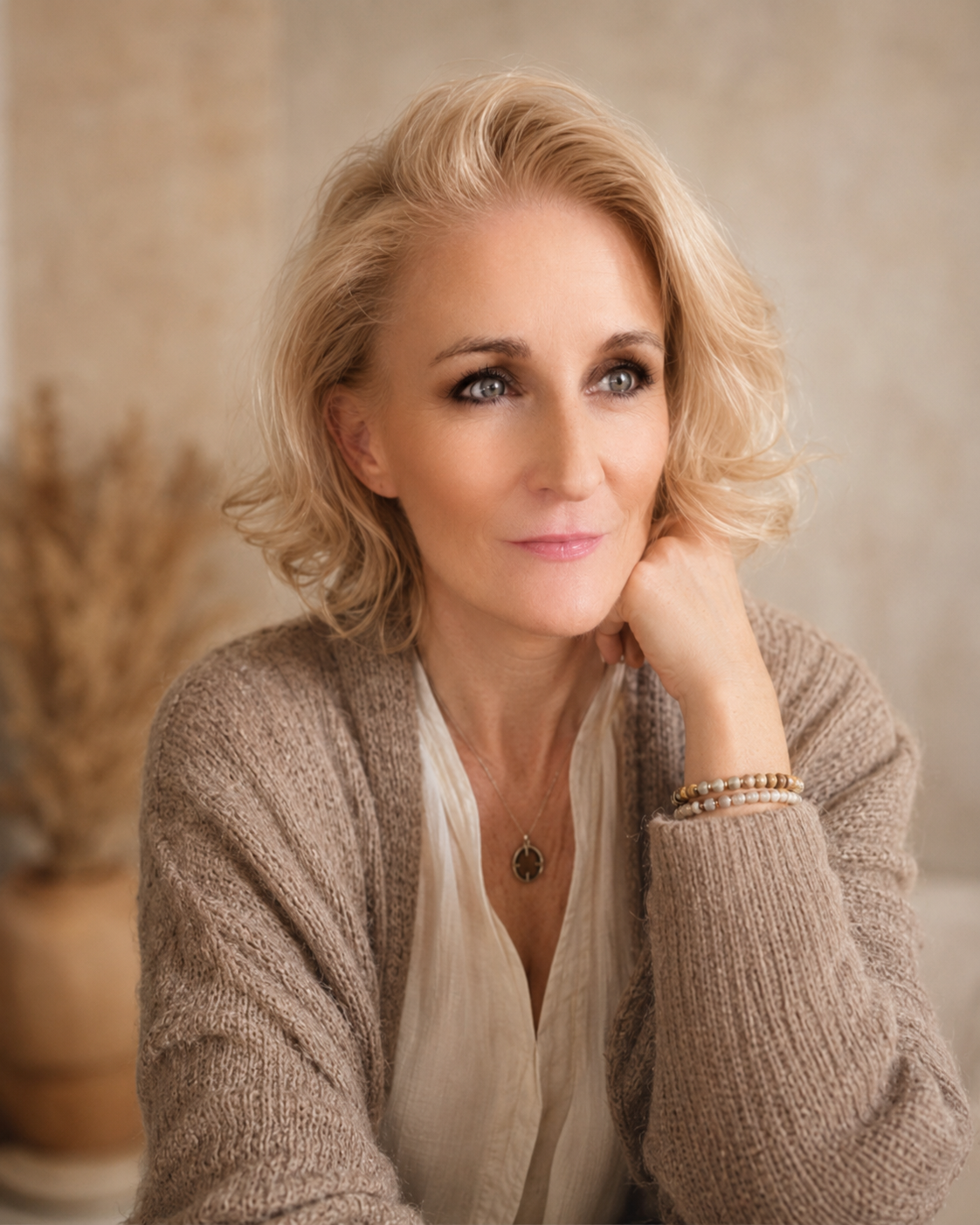
I have spent a large part of my life trying to understand people.
Why we become who we become.
Why we repeat patterns even when we know they hurt us.
Why some people seem able to move through change while others become trapped inside versions of themselves they no longer recognize.
Why we crave connection and still hide so much of ourselves from one another.
And perhaps most of all, what happens when we begin to question the things we once assumed were simply true.
I did not arrive at those questions through a perfectly planned career path.
I arrived at them by living.
I have built businesses, raised children, taught on stages, studied countless subjects, changed my mind, started over, stayed too long in places I had outgrown, pushed myself far beyond what I thought I could endure, and made more than a few decisions I would make differently today.
There have been periods of my life that were bright and expansive, and others that were much darker.
There were years when survival took up more space than self-discovery. Times when I felt disconnected from myself, when I relied too heavily on what other people thought I should be, and when the life I was living did not feel particularly aligned with the person somewhere underneath it.
I have made mistakes.
I have misunderstood people.
I have ignored things I knew deep down.
I have held on when letting go may have been healthier.
I have sometimes confused endurance with strength, usefulness with worth, being needed with being loved, and keeping the peace with actually being at peace.
Those experiences are not the whole of my story, but they are part of why this work matters so much to me.
Because somewhere along the way I began to understand that becoming more human is not about becoming more polished.
It is about becoming more conscious.
More willing to look.
More willing to ask uncomfortable questions.
More willing to admit when something no longer fits.
More capable of holding compassion for ourselves while still taking responsibility for what we do next.
Curiosity changed the direction of my life
For more than a decade, I have studied across subjects that are often kept in separate rooms.
Psychology.
Human behavior.
Personal development.
Relationships.
Spirituality.
Philosophy.
Religion.
Consciousness.
The nervous system.
Energy and the ways people experience the world beyond what can always be easily measured.
I have always been interested in the places where ideas overlap.
I am not especially interested in choosing a camp simply because the people inside it feel certain.
I am much more interested in asking:
What do we actually know?
What do we believe?
What have we experienced?
What patterns keep appearing?
What might we be missing?
And what are we willing to reconsider?
I believe curiosity is more valuable than certainty.
Certainty can close a door very quickly.
Curiosity leaves it open long enough for something new to enter.
“Some of the strongest growth in my own life has happened because I was willing to say: ‘I used to believe this, but I’m no longer sure that I do.’”
That kind of flexibility is not a weakness to me.
It is one of the foundations of becoming.
I do not believe people are broken
This may be one of the most important beliefs underneath The Courage to Be Human.
I do not believe most people need to be fixed.
I think people need opportunities to understand themselves more clearly.
We all develop patterns.
Some are taught.
Some are protective.
Some are inherited.
Some come from fear.
Some help us survive periods of life when we do not yet have better tools.
The problem is not that those patterns ever existed.
The problem comes when we continue living through them automatically long after they have stopped helping us.
Someone learns to keep everyone happy.
Someone learns never to need anything.
Someone becomes endlessly capable.
Someone becomes the person who fixes everything.
Someone learns to disappear whenever conflict enters the room.
Someone learns that achievement is the safest way to feel valuable.
Eventually those strategies can become identities.
And identities are difficult to question when we forget that we once created them for a reason.
I believe growth often begins very simply:
We notice.
We become curious about what we notice.
And then, when we can, we choose differently.
Not perfectly.
Not all at once.
Just consciously enough to begin moving in another direction.
I believe responsibility and compassion belong together
I believe deeply in personal responsibility.
No one else can decide who we become.
Other people can support us, teach us, challenge us, listen to us, and sometimes help us see something we could not see alone.
But they cannot do our inner work for us.
At the same time, I have very little interest in a version of personal responsibility that ignores how people became who they are.
We are shaped by families.
Culture.
Religion.
Opportunity.
Fear.
Trauma.
Education.
Relationships.
Money.
Community.
Loss.
Love.
Expectation.
The messages we hear repeatedly long before we are old enough to question them.
Understanding those influences does not remove responsibility.
It gives responsibility context.
Both can be true.
We can have compassion for what brought someone here.
And still believe they are responsible for what they choose next.
I think we need much more of both.
Connection matters to me because being around people is not the same as being known
I have always been fascinated by conversation.
Not networking.
Not small talk for the sake of filling silence.
The moment when someone realizes they do not have to perform.
The moment their shoulders drop a little.
The moment they stop giving the polished answer and start telling you what they actually think.
I have learned that people often carry far more complexity than they show.
The confident person may be frightened.
The funny person may be lonely.
The strong person may be tired of always being strong.
The person who seems certain may simply be afraid of what uncertainty would require them to reconsider.
And sometimes the person sitting across from us does not need advice at all.
They need enough room to hear themselves think.
That is one of the ideas at the heart of this project.
“You do not have to fully understand another person to treat their experience as real.”
You do not have to agree with someone to remain curious about how they came to see the world the way they do.
And you do not have to become like another person in order to learn something from them.
Human difference does not have to threaten us.
Sometimes it expands us.
Why I built The Courage to Be Human
For a long time, I kept noticing the same contradiction.
People are more connected than ever and often feel deeply alone.
We have extraordinary access to information and still struggle to understand ourselves.
We can communicate with hundreds or thousands of people and still wonder whether anyone truly knows us.
We are encouraged constantly to improve ourselves, brand ourselves, optimize ourselves, heal ourselves, define ourselves, and present ourselves.
But very few spaces simply allow us to be unfinished.
I wanted to create one.
The Courage to Be Human is not about giving people another identity to adopt.
It is not about telling anyone what their life should look like.
It is not about convincing people to believe what I believe.
It is a place for questions.
Stories.
Ideas.
Conversations.
Reflection.
And the possibility that seeing ourselves a little more clearly may change the direction we move next.
Sometimes that begins with a very large realization.
Sometimes it begins with a very small question.
What feels good in my life right now?
What is taking more energy than I realized?
Where do I feel most like myself?
What am I doing because I truly want to?
What have I outgrown?
What am I afraid to change?
What is the next healthiest step?
Those questions do not tell us who to become.
They help us participate in the process.
I am still becoming too
I do not stand outside this work.
I am inside it.
I am still learning where my own patterns came from.
Still reconsidering old beliefs.
Still learning the difference between perseverance and staying too long.
Still practicing receiving help instead of automatically doing everything myself.
Still discovering what freedom means to me.
Still learning how to take up space without feeling that someone else must become smaller.
Still changing my mind.
Still becoming.
And I think that matters.
Because I do not want The Courage to Be Human to be built around the idea that one person has figured something out and everyone else should follow.
I want it built around something far more interesting:
What happens when human beings become curious about themselves and one another?
What happens when we stop pretending we have everything figured out?
What happens when we allow ourselves to be both responsible and unfinished?
What happens when we become more honest without becoming less kind?
What happens when we listen long enough to understand another person’s lens before rushing back to our own?
I do not know exactly where all of those questions lead.
That is part of what makes them worth asking.
What I do know is that I want to spend my work creating more places where they can be explored.
Places where people can think.
Speak.
Listen.
Laugh.
Change their minds.
Tell the truth.
Be curious.
Meet people unlike themselves.
And perhaps leave knowing themselves a little better than they did when they arrived.
Because I do not think the goal is to become a finished human.
I think the goal is to become a more conscious participant in our own humanity.
And that is what The Courage to Be Human means to me:
“The willingness to examine who we have been while allowing ourselves to remain unfinished, imperfect, curious, connected, and still becoming.”